Express yourself

I’ve been in London for the last week or so and was just now watching a soccer program on tv. One of my favourite things to do when I travel is to watch the local sports channels. I love immersing myself in the current goings on, and am always fascinated to hear people from different sports and backgrounds discuss similar issues.

On this occaision, there was an interview with Mike Phelan, who was previously a player with Manchester United in the late 80’s and early 90’s and who had subsequently been Sir Alex Fergusen’s Assistant Manager for the last five years. In the interview, he kept using a term which I really sat up an noticed. He talked about how, given a certain players skills, you wanted to enable them to express themselves in doing that.

He brought it up when discussing a particular highlight of a player scoring an excellent goal from a free kick from a distance out. The player was able to shoot the ball through a gap in the wall, something not all players would be able to do with such ease and with the pace he generated. He scored, with the ball rocketing past the goalkeeper and into the roof of the net. This photo is of the shot I’m talking about. 
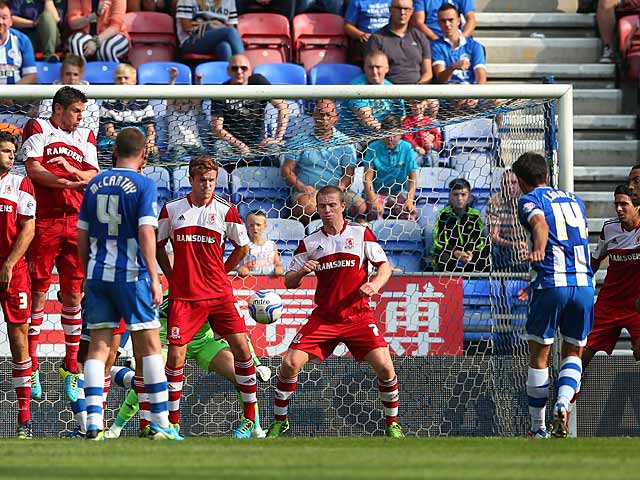
Image

It struck me as almost selfish that the player would take that shot, given the chances of it hitting another player or being blocked were so high. Phelan, though, distilled it very simply. He said something along the lines of (not verbatim)…

“when you have a player, that’s obviously got the ability to do something like that and the tools to make it a success, you need to let him express himself in those situations on game day.”

I like that. 

Do we need more corporate anarchists?

I recently received Euan Semple’s newsletter, which you should subscribe to, and found this post by Philippe Borremans. In it, he discusses the need for more corporate anarchists. I was interested, because I disagreed with the idea of the post. After reading it, I still disagree, but somewhat understand more where Philippe is coming from. Specifically, this paragraph jumped out at me as being the one I resonated with most.

Immanuel Kant describes anarchy as “Law and Freedom without Force” – this idea combined with one school of thought of anarchism – where the focus is on non-hierarchical organizations – was to me a kind of ultimate long term result.

Chameleon

I don’t believe we need more corporate anarchists. In my work, I’m lucky enough to get to meet with many people trying to change the way their organisations work. I get to see them at the coal face and chat to them about what they’re trying to achieve. I get to help them do that. But the biggest problem is not that they don’t have enough corporate anarchists helping them. The biggest problem is that people are scared of the corporate anarchists! I guess building more corporate anarchists (sorry for continuing to use that term) could be one solution, but I think building a more resilient organisation is the better idea. And perhaps that’s the point Philippe was making.

We need organisations that are more flexible, resilient and adaptive. The people I’ve seen get closer to these results have been tremendous at working together with others to reach that point. They’ve changed the way one simple process happened, or allowed their staff to work from home, or provided them with better tools to allow them to be more mobile. It’s not been anarchy, but a slow and deliberate march towards being more adaptable. And at the same time, they built around them an organisation or team that becomes used to a slow and deliberate march towards being more adaptable. If you want to create change, don’t try too hard to become a corporate anarchist. Just get started changing one thing. Then another. Then another.

Systems seek steady states

Simon Terry has written a couple of great posts lately, this and this, which have got me thinking about the way companies are organised and what can be done to improve performance. Specifically, this paragraph got me thinking.

In an era of rapid change and high levels of connectedness, what matters is not an individual’s stock of knowledge. The value of an individual stock of knowledge is falling as new knowledge is being created fast, search costs are reduced and there is an increasing focus on collaborative knowledge work.

Individuals are important in organisation life, obviously. We are the ones that do the work, that have and gather knowledge, and generally keep the wheels of enterprise turning. The skills that people have, however, may not be as important as has always been thought when it comes to improving performance. W. Edwards Deming, the chap that is credited with the Total Quality Management (TQM) philosophy, had a unique way of looking at the power of a system over the people that are within it.

The Appreciation of a system involves understanding how interactions (i.e., feedback) between the elements of a system can result in internal restrictions that force the system to behave as a single organism that automatically seeks a steady state. It is this steady state that determines the output of the system rather than the individual elements. Thus it is the structure of the organization rather than the employees, alone, which holds the key to improving the quality of output.

– Deming (from Wikipedia)

What I love the above statement, is the idea of the steady state. This is, essentially, the performance that an organisation is built to deliver. Things do tend to automatically refer back to a certain pace, or certain hum, at work. I’ve felt this, and I’m willing to bet you have too. People refer back to this, because it’s how work is done in the organisation. It’s the way things happen, and the way things are achieved. It’s the culture of a place.

If you’re looking to improve the performance of something, then this piece and others like it seem to indicate that training or getting better people won’t make much difference. People will perform in the way that the system in which they’ve been placed encourages them to.

Being inspired

I was walking through Town Hall in Sydney just now, and on my way through the turnstiles I noticed there was a rather large crowd that had formed just away from the commotion of the daily commuters. I then heard, over the din and noise, some violins screaming at a blistering pace. I kept walking, as Rose and I have our antenatal classes on tonight and I wanted to get home to ensure we got there on time…but I stopped as I was walking past and then stopped. The playing was just amazing, and so I stopped and listened for a bit.

I’d had a good day, but it was mainly spent in the rather monotonous surrounds of an office building. I’m lucky that I get to choose my work location; and I had chosen the venue today, but it’s funny just how much those environments can sap you of your mood and enthusiasm. Walking back through Town Hall, I was confronted by such enthusiasm and joy, I couldn’t help but be stopped in my tracks.

The artists where still school age, and were dressed in their uniforms like they’d just come from class. The cello player was sitting on his case and the two violin players were standing right next to him to hear his cue and play. The laughed as they played, and moved in amazing sync with each other. They found the rhythm instantly, and looked to each other for the beat and the feeling of the music when they missed it. The were inspired, and what struck me most was that they were inspiring each other in the process of making music. At one point they played Greensleeves, which is fairly standard. But about half way through, without so much as a nod to each other, they shifted gear and changed the tempo to move faster and play slightly behind the beat. They laughed as they did so, and so did I. I wanted to remember that feeling.

Thanks, buskers.

New Blog Design And Direction

It’s been a (long) while since I have posted. Certainly the times of blogging once a day are a blip on the horizon in the rearview mirror. But, I’m feeling quite freshened in the new year and so you’ll probably hear from me a little bit more again in the coming weeks and months. To help with that, I’ve made a rather more significant change to the blog recently, with the help of the guys from Tweaky. Here’s what I’ve done.

I’ve Changed to WordPress.com

I work at Yammer, where we almost religiously believe in the value of a multi-tenant cloud service. You can read a little more about our product development methods here. I’ve come to realise that I’m never going to keep up with the pace of change and improvement that’s happening here on WordPress.com, even with WordPress.org. WordPress.com also solves the mobile issue. This blog is now very easy to read on any device. Magic!

The platform here is going to continue getting better and better, and all I have to do now is make sure I pay WordPress.com my bill, and write content. It’s already gone through a significant improvement since I moved my old Wordpres.org blog over about a month ago. It’s very freeing to now be able to just write, and not worry subconsciously that it’s up to me to install an update or something like that.

I used Tweaky to help me move the blog

My old blog was actually still sitting on an old server of Ross’s, which he was deprecating. With the decision to move to WordPress.com made, I now needed someone to help me move the old blog over to WordPress.com. I got in touch with Tweaky and went through their process, which was awesome.

I set up the new WordPress.com site, and bought the appropriate bundles. I selected this theme and then posted them a couple of tweaks to move the domain over and apply a couple of my own custom trimmings to the look of the new blog. You can see a screenshot of the service here. It really is fantastic, I recommend you use them if you need to do any design or tech related stuff to your digital places.

Tweaky Screenshot

The new theme

I selected this theme with a couple of things in mind. I wanted something that was going to be very simple to navigate, which I think this is. Everything you need is in the footer and even though that can take some scrolling, it’s great on each individual post – which is really how most people navigate to this blog.

I also wanted something with an obvious archive, as that was one thing people told me needed including after the last redesign.

Finally, I wanted the ability for people to subscribe by email to remain prominent. This is where one of the tweaks came in – I asked the guys to create a hot pink call out around the subscribe box, to make that a little bit more obvious.

I really liked the simple structure of the new set up, and am already really enjoying getting back into thinking about just writing more here. Thanks for reading along! See you throughout 2013.