Considering mortality in 2012

I visited my grandpa today. That wouldn’t normally require a blog post, except that I haven’t seen him in about 18 months due to my living in Sydney. The other thing, is that he has Alzheimer’s disease. The long goodbye, as they call it.

It caused me to consider the current moment that we’re in. It’s very nearly 2012.Jan wrote a beautiful post about it today, discussing how it feel liberating for her consciousness not to need to post something every moment. She’ll go offline completely for a few days, and consider what the current moment means.

In The Tibetan Book of Living and Dying, there is a passage which I’m often reminded of that resonated with me again this morning after seeing Grandpa. It essentially says ‘consider the day of your death, because it’s the most important day of your life.’ Not being prepared for this, it posits, it one of the greatest crimes of modern man. And I wonder how that remains true in 2012.

Alzheimer’s is the long goodbye. But this morning I wanted it to be the long hello. Grandpa and I don’t really know each other. Not as equals, anyway. He grew up and rose through the ranks of the Victoria Police Force, raised my Dad and his three siblings and played golf. But he didn’t journal, that I know of. There are stories that remain, but not many artifacts of the man that once was. And so, it’s hard to tell if he is or will be ready for death. It was hard to tell if anyone in the hostel we visited this morning was ready. And it was another reminder that I continue to ignore that question, too.

Today, I couldn’t help but wonder what it will look like in the future as our digital selves continue to echo, healthily, through time.

Time and Space the key to self organising

I was driving to hockey training at some stage this last month and was taken by the billboard you see below. It is on the corner of Nepean Highway and North Road, in Melbourne, Victoria (Australia – for the international readers)

034.JPG

It stunned me.The first thing that got me about the billboard, which made me think this wasn’t any ordinary billboard, was that it is advertising a church service. Wow. When was the last time that the church (who I assume have a fair bit of cash) was buying advertising space on a huge, prominent billboard?  Probably since the town crier was a favourable professions for kids to consider when leaving uni.
But the thing that got me most about the billboard was what it was telling me to do. It simply says ‘Sunday at St Michaels’ and then just gives me a time (10am on Sundays) and a space (St Michaels, 120 Collins St). And that, is it. No website to remember to look up. No phone number to ring. No special deal to remember or deadline to beat. No price to compare and no competition to rate. It was just a simple time and space. It presented me with a simple proposition. What was I doing on Sunday, at 10am? And, if the answer to that question was nothing, then why not come to 120 Collins St?
Naomi Klein, in No Logo, talks about how we are subjected to thousands of advertising messages a day and the impact that has on our world.  I want to take this to the next logical conclusion. If we are subjected to thousands of messages a day, we are also subjected to hundreds of possible ‘things’ to remember. I’ve riffed about mental illness and anxiety before, but one of the key things which seem to cause it is a large amount of thoughts flowing unabated through one’s mind. Now, if you only abosorb 1% of all the messages that you are exposed to that equates to about 30 things a day you are trying to remember. I’d imagine it would be tough at the best of times. Let alone if things are busy and you’re struggling to find time to scratch yourself anyway.
The church has created something quite special in the world of advertising and provided a lesson for the rest of us to learn when it comes to self organising ourselves into communities of practice and expertise. Earlier in the year, Pat Allan, Melina Chan and I organised an event called Trampoline. It was a great lesson for the three of us in creating a time and space for people to congregate around to share their experiences and ideas. The greatest take out of this for me was that successfully creating a space for people to be themselves and providing a time for them to do it is a powerful tool in the modern era. Here in Melbourne, we have seen this power a number of times now, with Melbourne Jelly now established on every 2nd Friday at Kisla Interactive HQ in Fitzroy (thanks in large part to the great work of Pieter Peach and Maxim Shklyar) and Social Media Breakfast ticking along every Friday morning at Mr Tulk (again, thanks to the work of Kate Kendalland Lucio Ribeiro).
In the world increasingly becoming a mixture of self organising systems and traditional hierarchy, the ability for people to organise a time and space where people can meet and connect is beginning to show real pay off when it comes to taking action and getting things done in small, quickly organised cell groups. Who said the world couldn’t function without hierarchy? The billboard reiterates, we’ve been doing it for a fair while now. The church had it right thousands of years ago.

Climate change does impact the worlds poor

What follows is a comment I posted in reply to the following Andrew Bolt article that appeared in the Herald Sun on Tuesday the 12th of May. I don’t normally just report content like this, but felt pretty strongly about what was written and felt it important to point out where I think we’re at as a global population.

I used to work for World Vision Australia a little while ago and have only the most positive praise for what they are doing. They are the best stewards of your money in the industry. All the money you donate is attributed to the children you are sponsoring.

Climate change causes poverty problems

The importance of Climate Change is paramount in the battle against poverty. As climate change continues, we are beginning to see more and more of the effects it has on the poorest people on the planet. The following quote is from Rajendra Pachauri who heads the UN Intergovernmental Panel on Climate Change.

“It is the poorest of the poor in the world, and this includes poor people even in prosperous societies, who are going to be the worst hit,” IPCC Chairman Rajendra Pachauri told journalists at the release of the report’s summary for policymakers in Brussels. “This does become a global responsibility in my view,” he said.

We saw this only last year, before the ‘Global Financial Crisis’ when the ‘Global FOOD Crisis’ hit hardest. As fuel prices went up so too did the prices of food. For us here in Australia, that just meant cereal was a little more pricey. For most of the population around the horn of Africa, it meant not eating.

To think that World Vision should just treat those people who are already suffering is near-sighted and systemically flawed. Why let people suffer first BEFORE helping them? Why not proactively work to mitigate the devastating effects climate change might have on poverty before it gets the chance to do so.

When I worked at WVA, Tim Costello was often heard to mention that Climate Change could essentially waste all the money we have ever spent, as a global population, on poverty alleviation if we didn’t act fast. Sounds ridiculous doesn’t it? But when you think about it, if you accept that climate change is causing losses in food-crop production and yield levels globally AND the natural disasters that are becoming more and more frequent (whether we can directly attribute them to climate change or not is another question) then you can see that this isn’t such a long bow to draw.

The question of global warming and its effects on the world’s poorest children is not up for discussion, as far as I’m concerned. Whether you support World Vision or Oxfam or any other NGO, please support them in doing this work. It will help save lives and that’s not a waste of money in my language.

 What do you think?

Trampoline Melbourne

In about two weeks, Melbourne will play host to the first Trampoline event on the planet with 100 minds coming together for a day to share what they find amazing. In the tradition of BarCamps and other Unconferences, the agenda for the day will be created by the participants. Pat has already talked about Trampoline on his blog, here.

Trampoline is something that myself, Mel, Pat and Bei have come to after we realised that the most energising discussions were ones that took place between energised people who were constantly amazed by something in this wide wide world of ours. Trampoline is an event being held with that in mind. We want people from all disciplines and schools of thought to come together on one day here in Melbourne and discuss what it is in this world that they find amazing. You don’t need to be an expert – you can see some people beginning to think about what they will discuss and present. We have also secured the fantastic Donkey Wheel (the red-brick building in the picture below) venue for the occasion, which promises to make it an extra-ordinary event! Already, I can’t wait!

Donkey Wheel Building

I encourage you to come along and join in the conversation. The day promises to be full of insights and new things to play with, as well as a great bunch of people to meet and share time with. But do be quick to register for Trampoline, as it is limited to 100 participants and we are already two-thirds of the way there.

Leaving your legacy and tacit knowledge sinks

These last 2 weeks, we have been swallowed up in the joy and excitement of the Obama presidency sweeping into town in Washington, with the Inauguration taking place early last Wednesday morning Australian time. Sadly, I was not one of the millions who woke early to watch the celebration, but I certainly caught up with all the news and exclamations of the event the next day.

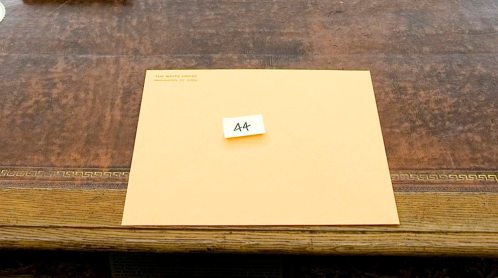
 But I’m not about to write ‘another’ blog post loving the fact Obama is now in (even though I do) or discussing how his new agenda will push and create great change in this world (which I do hope it does). I actually want to focus on one, quite traditional and, I believe beautiful, act of the presidential handover. I’m talking about the letter the last president leaves ‘the next guy’ on the table in the oval office.

president.jpg

 (Picture from http://www.boston.com/bigpicture)

I first heard about this little tradition a few years back, and can’t quite remember the source although I believe it was in one of the Bill Clinton (auto?)biographies I was reading at the time. Certainly, I am taken by the romance of it all. Everything in the Whitehouse is packed up, the bare bones of what was the epicenter of the worlds most powerful economic and political engine for the moment exposed by the lack of staff, furniture and infrastructure. The oval office is left bare, with only the desk, chairs and basic furniture remaining. There are no artifacts of the former president left behind, except for one letter left on the oval office desk.

The letter is an informal handover, written by the previous President outlining tips/thoughts/feelings and general insight into what ‘the next guy’ is likely to face in the position. The Office of the US president is one that very few people (44 now) ever experience, and so the learning’s they pass on to each other in these letters would provide certainly an amazing view into the life they have just been elected to.

I think it’s just the romantic in me, but this provides a great lesson for us to learn in organisational life. Why isn’t it that we treat everything we do with such a legacy? Why is it that the great new blog you may have started at work, or the amazing project you just managed but now have to move on from is not captured in such a legacy and fashion. Shouldn’t’t it? Why don’t we write notes to the ‘next guy’ when we leave an organisation or position, and wish people all the best? And, most importantly, how do we capture what it ‘felt’ like to be doing the work we have just handed over and what can the incumbent to the role expect in their time in the chair? I know it’s a bit of a reach, and a bit far removed from the idea of tacit knowledge sinks and knowledge management – but I believe if we treated each role with a greater sense of the legacy we leave behind in our time served such knowledge management processes, procedures and databases may not be necessary. I think this is crucial in a new world where intrapreneurship and internal innovation is key. We deal in ambiguity, and handing over the not always implicit things we have learned in that time is a key requirement in the future.

How are you handling it? Have you written that letter yet?