
Guest post by Cameron McGrane (FB | T)
DISCLAIMER: I have no formal medical training. I’ve read a couple of blogs, watched a few videos and listened to “Born to Run“. I did trawl google on “Barefoot” and “Flat Feet” that only returned contrary views. This post is based on trial and error with references that came to mind along the way. I explain my experience and what I found useful going from orthotics to no support. The decision is yours alone.
The term “barefoot” in this post means no arch support and little or no padding between your feet and the ground. Orthotics and arch support are used interchangeably
200,000 nerve endings, 33 major muscles, 28 bones, 19 ligaments; the human foot is a bio-mechanical masterpiece. – Someone at VIVO BAREFOOT
As a flat footed, dependent orthotics user, I wanted in on full time barefoot. Flat footed people like Tim Ferris were fixing lower back (shared ailment) issues by going barefoot yet after further research I wasn’t convinced. No evidence existed that flat feet individuals could benefit from going permanently barefoot and everything I discover was the contrary. My deepest fear was fast tracking my knees to early replacement by discarding my arch support. Fears I overcame with implications I still haven’t an answered.
Transitioning is a leap of faith which every flat footer must take and accept the consequences. I took that leap and 12 months later am now no support, padding and injuries.
1. Noticeable Changes
Pro
- Bigger outer stomach muscles & stronger core
- Physically stronger with less exercise.
- Reduced anterior pelvic tilt (duck ass)
- Improved stability – feel more grounded, balancing is easier
- Improved posture
- Less lower back pain
- Run longer distances -(Front foot striking) – nearly impossible to roll ankle when off road.
- No dependence on mechanical support
Cons
- Requires time and dedication
- Pain
- Potential to increase onset of pre-existing injury (e.g. knees).
- Increase chance of new injury (e.g. not warming up. Taking things too fast)
- Messed up walk as gait optimizes
- Cost of changingdiscarding foot wear (office wear)
2. Bring out the stunt foot! Before and After.
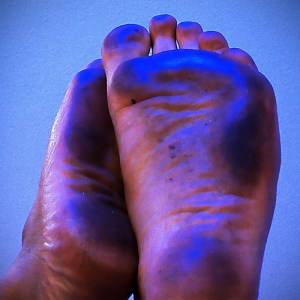
Below is a before and after shot. Well not exactly. Steve suggested a before and after and I’d already noticed changes in my foot so my friend Rhys who has the exact size 11 flat and similar pre-barefoot physique as me volunteered for the shot.

A. Low muscle mass and definition
B. Weak forefoot pad
C. Undefined arch muscle
D. Swollen puffy ankle
It’s not that bad it just like making fun of my mate’s foot.

A. 3rd head developing
B. Bulging flexor hallucis brevis muscle
C. Pulsating veiny abductor hallucis
D. Ripped and lean ankle
E. Looks like bruising is actually dirt & grit
Yes yes. They’re not the same foot. Take my word that my foot was in pretty bad nick too. The point, is your foot is like any other part of your body and can be shaped and strengthened for performance.
3. It’s a Zero Sum Game
I’m not an “All or Nothing” kind of guy. But when it came to going barefoot it was clear I had to decide. It was too disruptive flipping between arch support and none. Besides I’d been flipping my whole life. Barefoot around the house wasn’t fun. Sunday mornings? Shoes came on after an hour or two. Too many friends have had me answer the door with sneakers and boxer shorts first thing in the morning. Their perplexed glance returned with a you don’t understand look. My body needed a stable adjustment path for once in it’s life and after testing my once loved orthotics after 3 weeks barefoot, it was apparent it would be the last. They felt wrong and were reversing my transition.
4. Know Thy Foot
A big personal realization is the foot is jam packed full of muscle (who would have thought?!?) and like any muscle it can change in capacity when trained with purpose. My belief, is one can exercise their foot muscles, realign tendons/ligaments and reset nerves to make the arch stronger as any “normal” arched person. In essence growing your arch. O.K adults may not get that “sexy half mango” look but you can get mass and strength. If you don’t have a legitimate fallen arch then you likely have a flexible flat foot which means you can make those feet ripped!
Super Tip: If an arch develops when you stand your toes on one leg then your flat foot is flexible and you are ready to rock.
To truly understand what your dealing with you must see it first hand. Though this next video is somewhat macabre it provides insight on how the foot works, see the actual arch and help visualize it when you start putting it to work.
Start at the 9:00 minute mark, it takes you to the goodies. The abductor hallucis (arch muscle) and Flexor hallucis brevis (Big Toe Pad Muscle).
5. No Pain No Gain
The four most addictive things in the world are heroin, carbohydrates, a monthly pay check and arch support.
When one gives up an addiction there is discomfort involved. Agreed, orthotics are more a dependency but I wanted to mash it in the above quote.
Many experts on the subject is going to say ” If it hurts stop take it slow”. Most of them are referring to more the running than anything else. Look… when a lifer arch support user (i.e. me) goes cold turkey they ain’t going to be running. They’re literally learning to walk again and there is going to be pain. Your body will ache, knees will creek, self doubt will linger, it will suck and all you want is to go back to that warm place of adjust-mental bliss. Kind of a like an ex-girlfriend until you quickly realize why they are your EX!
If you are going through hell, keep going – Winston Churchill
It took me 4 weeks to get through my pain wave and instep withdrawal. For some it may take longer. Embrace the suck – but if you’re walking, stretching and resting and it still hurts especially in the feet then rethink your approach.
6. Code Slow
The biggest mistake people make when going barefoot is forcing change and not letting their body adjust naturally. Normally, it’s because people want to start running barefoot and though they have good arches a 1000 other parts need to adjust too. Walk it out big fellas. Ride the bike too. Take the bus. You’re going to be hurting anyways..don’t make it worse.
Code Slow! Walk, Rest, Stretch, Rest, Walk.
7. Learn to Walk Again
Special Story Time: Recently I caught up with my close friend Ov. Ov sees it as it is and does it with out fan fair or self promotion. Noticing he was wearing flats, I asked with a sneaky suspicion whether he is flat footed. “Yes, I wore orthotics up until 5 years ago then got jack of them”. What did you do after? I asked. Ov responded “learnt to walk properly“.
If Ov can do it and this chaos theory driven computer software (learns like our brain) can do it then we can too.
Did you notice the perfect gate on the computer model above? Apart from thinking chaos and neural network theory is cool it was the only example of a gait to strive for (pardon the pun). I couldn’t find one real life example of a normal gait video. It’s been explained to me by a podiatrist just no example. Maybe its because footwear is recking our gait?!>!
Spontaneous Content Outbreak – The above thoughts forced me to shoot what the podiatrist showed me. Pretend my hand is a foot and my pointer finger is the big toe. Basically it starts with landing on the heal, roll along the outside of the foot then push off directly forward with the big toe. In theory this is a normal gait and what my arch supports helped me do with out thinking.
8. The Long Walk
Don’t run. Grab an audio book, walk, walk and keep walking. Walk like someone is behind you with a shotgun and if you stop they’ll blow your head off and if your last person walking you’ll go to a place full of virgins with professional ballet dancer arches and you are the arch king with arches that go all the way to your shoulders.. How ever you do it. Walk Forest Walk.
On my first walk, I walked about 400 metres before turning around because it got hurties. Every couple of days I could walk a little further. I focused on posture, dropping the shoulders, my hips naturally start to tilt backwards, I bent my knees a little more. I let my feet roll just like they did with the insteps just like the examples above. Then everything would get retarded and I would have to re-focus. A continual test of focus and conscious anatomical manipulation. Some of it will sink it into my subconscious other parts won’t.
Walking is our birthright. Two feet and a heart beat baby!
9. Lack of Stretching – The Achilles Heal
After years of arch support those Achilles are going to be frigging tight. Stretch them and the calves as much as possible.
10. Do What Ballet Dancers Do To Strengthen
If there is any community where foot fetish is the norm then its Ballet. Strong arches are highly valued, flat ones are scorned, bitchyness is expected and creepy feet licking trolls are just around the corner. To save you the drama, below is the better of the lot and covers 101 exercises.
[Tip] Drive weight through big toe to strengthen the abductor hallucis and Flexor hallucis brevis.
If you have time and discipline the
Theraband seems particularly effective and popular with the dancers.
11. Lose Weight
If you want to give your skeletal-muscular system a fighting chance to adjust with less pain and reduced chance of injury then drop the weight. Even being average or under weight you still have a chance of permanently messing yourself up. Flat feet or not going primal requires a primal body which means lean….really lean.
12. Massage

If you can afford it a regular Chinese foot massage then do it! Otherwise buy the best therapeutic piece of equipment known to man the Foam Roller and start working those calves.

If you are yet to carry a foam roller like a rocket launcher I advise you start.
13. Shoes, Shoes, Shoes

As you can see above I’ve had my fare share of shoes. I like to trail run and I like shoes too. Since going barefoot I’ve realized the best shoes are none at all.
- 1. New Balance 904
Standard trail shoe.
- 2. Nike Free Run
My first shoe which simulates “barefoot”. Huge heal drop. Wore for 2 weeks. Don’t buy if you are serious.
- 3. New Balance MT101
A pre-cursor to the New Balance Minimus it’s a great running shoe (not barefoot) – great for hard core terrain, water & mud. Only worth getting if you are prepared to modify the shoe to reduce the heel drop
- 4. Vibram Five Fingers KSO
My favorite barefoot shoe. Unlike the trek the sole is a couple mills thick and felt the most barefoot out of anything I wore.
- 5. Vibram Five Fingers TREKS
Like the KSO, except for a thicker sole and warmer kangaroo leather upper. I’ve found them restrictive because of the dense sole. Still best for trail as it protects from sharp rocks.
- 6. Terraplanna
My favorite office shoe that you can run in if you want or need to.
For reviews on the explosion of barefoot shoes go here.
It looks easy on paper but when you have flat feet the decision is daunting and it is a real risk. If you take the leap you have to commit and follow through, there is no turning back. Based on new research emerging every day the odds are in your favour. I’m realizing the benefits and let’s not forget the mental freedom of not depending on a device to control how I move. Watch out Youtube ballet brats I’m going be in the house soon show’en my sunken yet ripped arches!!!


You must be logged in to post a comment.