Climate change does impact the worlds poor

What follows is a comment I posted in reply to the following Andrew Bolt article that appeared in the Herald Sun on Tuesday the 12th of May. I don’t normally just report content like this, but felt pretty strongly about what was written and felt it important to point out where I think we’re at as a global population.

I used to work for World Vision Australia a little while ago and have only the most positive praise for what they are doing. They are the best stewards of your money in the industry. All the money you donate is attributed to the children you are sponsoring.

Climate change causes poverty problems

The importance of Climate Change is paramount in the battle against poverty. As climate change continues, we are beginning to see more and more of the effects it has on the poorest people on the planet. The following quote is from Rajendra Pachauri who heads the UN Intergovernmental Panel on Climate Change.

“It is the poorest of the poor in the world, and this includes poor people even in prosperous societies, who are going to be the worst hit,” IPCC Chairman Rajendra Pachauri told journalists at the release of the report’s summary for policymakers in Brussels. “This does become a global responsibility in my view,” he said.

We saw this only last year, before the ‘Global Financial Crisis’ when the ‘Global FOOD Crisis’ hit hardest. As fuel prices went up so too did the prices of food. For us here in Australia, that just meant cereal was a little more pricey. For most of the population around the horn of Africa, it meant not eating.

To think that World Vision should just treat those people who are already suffering is near-sighted and systemically flawed. Why let people suffer first BEFORE helping them? Why not proactively work to mitigate the devastating effects climate change might have on poverty before it gets the chance to do so.

When I worked at WVA, Tim Costello was often heard to mention that Climate Change could essentially waste all the money we have ever spent, as a global population, on poverty alleviation if we didn’t act fast. Sounds ridiculous doesn’t it? But when you think about it, if you accept that climate change is causing losses in food-crop production and yield levels globally AND the natural disasters that are becoming more and more frequent (whether we can directly attribute them to climate change or not is another question) then you can see that this isn’t such a long bow to draw.

The question of global warming and its effects on the world’s poorest children is not up for discussion, as far as I’m concerned. Whether you support World Vision or Oxfam or any other NGO, please support them in doing this work. It will help save lives and that’s not a waste of money in my language.

 What do you think?

Trampoline Melbourne

In about two weeks, Melbourne will play host to the first Trampoline event on the planet with 100 minds coming together for a day to share what they find amazing. In the tradition of BarCamps and other Unconferences, the agenda for the day will be created by the participants. Pat has already talked about Trampoline on his blog, here.

Trampoline is something that myself, Mel, Pat and Bei have come to after we realised that the most energising discussions were ones that took place between energised people who were constantly amazed by something in this wide wide world of ours. Trampoline is an event being held with that in mind. We want people from all disciplines and schools of thought to come together on one day here in Melbourne and discuss what it is in this world that they find amazing. You don’t need to be an expert – you can see some people beginning to think about what they will discuss and present. We have also secured the fantastic Donkey Wheel (the red-brick building in the picture below) venue for the occasion, which promises to make it an extra-ordinary event! Already, I can’t wait!

Donkey Wheel Building

I encourage you to come along and join in the conversation. The day promises to be full of insights and new things to play with, as well as a great bunch of people to meet and share time with. But do be quick to register for Trampoline, as it is limited to 100 participants and we are already two-thirds of the way there.

Leaving your legacy and tacit knowledge sinks

These last 2 weeks, we have been swallowed up in the joy and excitement of the Obama presidency sweeping into town in Washington, with the Inauguration taking place early last Wednesday morning Australian time. Sadly, I was not one of the millions who woke early to watch the celebration, but I certainly caught up with all the news and exclamations of the event the next day.

 But I’m not about to write ‘another’ blog post loving the fact Obama is now in (even though I do) or discussing how his new agenda will push and create great change in this world (which I do hope it does). I actually want to focus on one, quite traditional and, I believe beautiful, act of the presidential handover. I’m talking about the letter the last president leaves ‘the next guy’ on the table in the oval office.

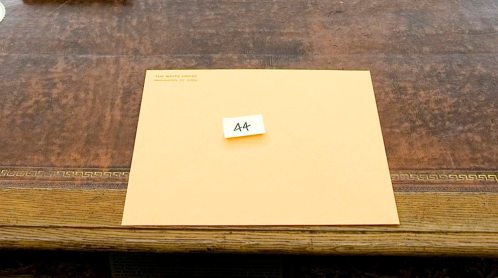
president.jpg

 (Picture from http://www.boston.com/bigpicture)

I first heard about this little tradition a few years back, and can’t quite remember the source although I believe it was in one of the Bill Clinton (auto?)biographies I was reading at the time. Certainly, I am taken by the romance of it all. Everything in the Whitehouse is packed up, the bare bones of what was the epicenter of the worlds most powerful economic and political engine for the moment exposed by the lack of staff, furniture and infrastructure. The oval office is left bare, with only the desk, chairs and basic furniture remaining. There are no artifacts of the former president left behind, except for one letter left on the oval office desk.

The letter is an informal handover, written by the previous President outlining tips/thoughts/feelings and general insight into what ‘the next guy’ is likely to face in the position. The Office of the US president is one that very few people (44 now) ever experience, and so the learning’s they pass on to each other in these letters would provide certainly an amazing view into the life they have just been elected to.

I think it’s just the romantic in me, but this provides a great lesson for us to learn in organisational life. Why isn’t it that we treat everything we do with such a legacy? Why is it that the great new blog you may have started at work, or the amazing project you just managed but now have to move on from is not captured in such a legacy and fashion. Shouldn’t’t it? Why don’t we write notes to the ‘next guy’ when we leave an organisation or position, and wish people all the best? And, most importantly, how do we capture what it ‘felt’ like to be doing the work we have just handed over and what can the incumbent to the role expect in their time in the chair? I know it’s a bit of a reach, and a bit far removed from the idea of tacit knowledge sinks and knowledge management – but I believe if we treated each role with a greater sense of the legacy we leave behind in our time served such knowledge management processes, procedures and databases may not be necessary. I think this is crucial in a new world where intrapreneurship and internal innovation is key. We deal in ambiguity, and handing over the not always implicit things we have learned in that time is a key requirement in the future.

How are you handling it? Have you written that letter yet?

How to Prototype: The Awesome Guide

This is a guest post from Lindsay Gordon, prototyping genious from South East Water. Lindsay attended Olin College in Massachusetts, got a degree in engineering and most importantly, got taught by IDEO. She now works here at South East Water’s Recycled Water program and helps me be inspired through her ideas about how to Prototype. If you want to get in touch with Lindsay, she will be answering comments on this post or email: lindsaygor@gmail.com.

At its simplest, a prototype is a representative model used to test a design concept. Prototypes can be built out of paper and tape or machined using advanced materials and techniques. Regardless of the level of detail, prototyping is a very valuable exercise during the design phase of any project. This quick overview provides an explanation of why prototyping is important, how to do it and why engaging users is vital.

Why is prototyping useful?

1. ‘Proof of Principle’/Exploration
o Making a physical model can be a source of creativity to get the juices flowing before you have all the answers
o Gives you an opportunity to test the ‘proof of principle’ of your most basic idea and find unexpected problems
o Allows you to explore design alternatives, improve the design and allow your team to appreciate the experience of the end user

2. Communication of your idea
o Internal: Words leave room for misinterpretation, simple 3-D models can communicate ideas to team members and convince them of your design concepts
o External: A slightly more sophisticated model can be very useful in pitching/selling your idea to stakeholders. Shows a good understanding of the product/service and facilitates visualisation of your idea

3. User Involvement
o Giving your user something tactile requires user involvement in the design process (easier to understand users and their experiences, behaviours, perceptions and needs with a physical object)
o User feedback is delivered in real time while they’re experimenting with the prototype

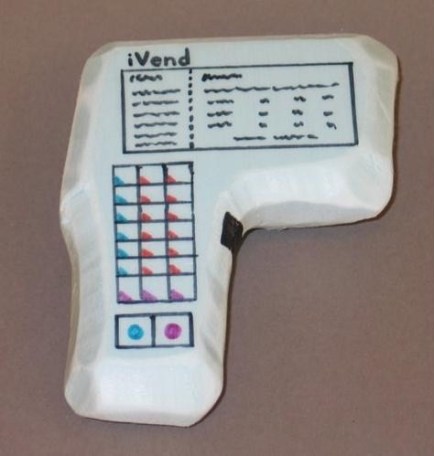
iVend

Quick-and-Dirty Prototyping

Rough prototyping involves using any materials available to make a quick, simple and cheap 3-D model of your product or service.

The scale will depend on what product/service you’re modelling: actual size may make sense for some items (telephone) but others may require larger (medical devices) or smaller (buildings) scale. Use any materials you can find: straws, cardboard, fabric, wood, foam core, hot glue, rubber bands, post it notes, polystyrene, toothpicks etc. It also may be useful to take apart existing products to find materials.

Tips:
1. When involving users don’t worry about creating a professional looking model but make it refined enough that it won’t distract them. You want them to take you seriously but if the prototype has too much detail users may focus on the wrong things (e.g. a button is too big)
2. Early models should invite improvement! Inspire your audience to assess the service through the eyes of a customer and imagine the concept evolving into something they would enjoy using

How to model a service

Vending Machine opperators and service patterns

Modelling a service is a bit trickier than modelling a product. A service model needs to focus on the interaction between the user and the service and highlight all the key players involved in the duration of the service.

o Visual: Storyboards, vignettes, cartoons and amateur videos are all good tools to model your service. Focus on service scenarios: physical elements, interactions and action sequences with various key players
o Where applicable, create 3-D models of any interfaces between customers and service components
o Find an initial group of a few key customers that are willing to help with the prototyping, will brainstorm possible service scenarios, look over storyboards, interfaces, etc.
o Above info taken from this interesting article about service prototypes

Why human focused design?

Designing WITH the user and not FOR the user takes the guesswork out of whether your final product will be useful. Products and services should be designed to fit in with a user’s current behaviours and values rather than force them to change to accommodate your new design.

“User Oriented Design = Subway (now I’m doing the cheese, which kind would you like) instead of “I made you a sandwich, hope you like what I put in it”

Working closely with users provides opportunities for feedback at each step of the design process. Spend time with people in your intended user group and try to witness them in their natural habitat; you can learn a lot from observing specific activities and putting yourself in your user’s shoes.

Another way to test your model is to engage individuals who are completely unfamiliar with the product or service and ask them to evaluate their experience with your prototype. This can provide valuable feedback about whether your design is intuitive and easy to use. Jan Chipchase runs an amazing blog where he researches people’s habits with mobile phones accross cutlures for this purpose.

Next Steps

If you’ve had success with rough prototyping and are looking for a more sophisticated prototyping method you may want to check out 3-D modelling software (such as Google’s SketchUp which is free, has great video tutorials and is quite intuitive). There may also be opportunities to create a working prototype or more advanced models using rapid prototyping companies.

Leave me a comment or flick me an email if you have any other questions about prototyping!

Strategic Tips when applying for Grants

Grant writing. So many small to medium enterprises rely on their ability to generate revenues and cash from grant sources to survive and even thrive. The art of writing a successful grant is one highly valued by such organisations, and even lauded within the industries that these talented people. But often I see many people within these organisations panic and jitter when a new tender hits the press. The thing is, often this frenzied grant writing is misdirected or strategically off topic, even if the grant is successful. What follows are three key tips to consider before writing the grant.

 1) Make sure there is a strategic reason for writing the grant

Grant writing is hard. There is a lot of stakeholder engagement that needs to take place prior, during and often (as the result of diligence and regulation) after the grant has been written. The key thing to remember, however, is that you do not waste time writing a grant. What do I mean by this?

theme-park-ds-title.jpg

The key, is ensuring that you follow your strategic goals and objectives when writing the grant. If you don’t strategically plan on opening a massive, pirate themed adventure park then why would you apply for a grant to build one? Okay, so the example is quite extreme but it goes a long way to highlighting me contention. If the grant opportunity doesn’t talk directly to your strategic intent and organisation scope, then don’t waste your company’s precious time and resources writing it.

When a grant opportunity comes up, first ask the key questions:

i) How does this match our 3 year organisational strategy?

ii) How does this match the strategic direction of the business unit (or division eg. Marketing, Service etc etc) that would be responsible for implementing the grant.

iii) What is our organisation scope? What don’t we do? Is that what the grant is asking for? 

2) Find partners that can expand your strategic impact whilst remaining on scope

Okay, so you answered the above questions and you have now found a great opportunity! The grant on offer talks directly to the direction your organisation was already moving, meaning that if successful, the affect on your company will be like strapping a rocket to your back whilst roller-blading.

But often those who give the grant request that organisations partner when applying for grants. This is occurring more and more now here in Australia (and I’d appreciate any international readers to confirm the trend abroad). This partnering mitigates much of the risk the grantor faces when giving money to SME who may (or may not) achieve suitable results for the cash. As such, an important factor to consider as you begin to seek a partner is an organisation that can raise your results whilst not forcing you to do things you wouldn’t otherwise do (ie – find a partnership that doesn’t involved scope creep.)

So when discussing how to leverage a partnership for your organisation, consider any “friendly organisations’ in your industry or geographic area you are on good terms with. A strategic alignment with an organisation that would otherwise be competitor could potentially increase the results both parties experience.

The other option available to you when partnering is to find someone in another industry whose skills you can leverage to achieve even greater results than if you either trekked the grant alone or partnered with a competitor. An example may be to partner with an advertising, public relations, consulting or legal firm whose skills can assist you with implementing the grant plans or even better. (Remember, now that the grant talks directly to your strategy, engaging a professional services partner will thus provide new services and talent you otherwise may not get exposure to – a huge competitive advantage).

So ask yourself the questions:

i) Who are we currently friendly with, and how could be leverage this opportunity together? Can we cooperate around geography, demographics of customers or vertical alignment?

ii) Who would you love to partner with if money/connections/politics was no barrier to entry? How can you approach these people and why should they work with you on this? What is the shared opportunity?

iii) Is there are larger player in your industry that you may be able to partner with to leverage their brand towards a new opportunity for both of your organisations?

iv) Can you partner with both a friendly organisation AND a company from another industry whilst remaining within your strategic scope?

3) Ensure that you include new resource requirements if successful

A final tip is to ensure that your company has the resources available to actually implement your grant when you get it. Many organisations make the mistake of applying for grants when they are not ready too actually win them, or at least have a good idea of how they will grow to successfully implement the plans they pitched on. So, make sure you ask yourself:

i) Who will project manage the implementation of this new project when we get the grant?

ii) If the answer to the above question is a resounding silence…how are you going to recruit, pay, find someone to run with the ball if no one within your organisation currently can?

iii) Can you move resources around so that an existing staff member can work on the new internal venture whilst you hire someone new to backfill their role?

Good luck and happy grant applying!